
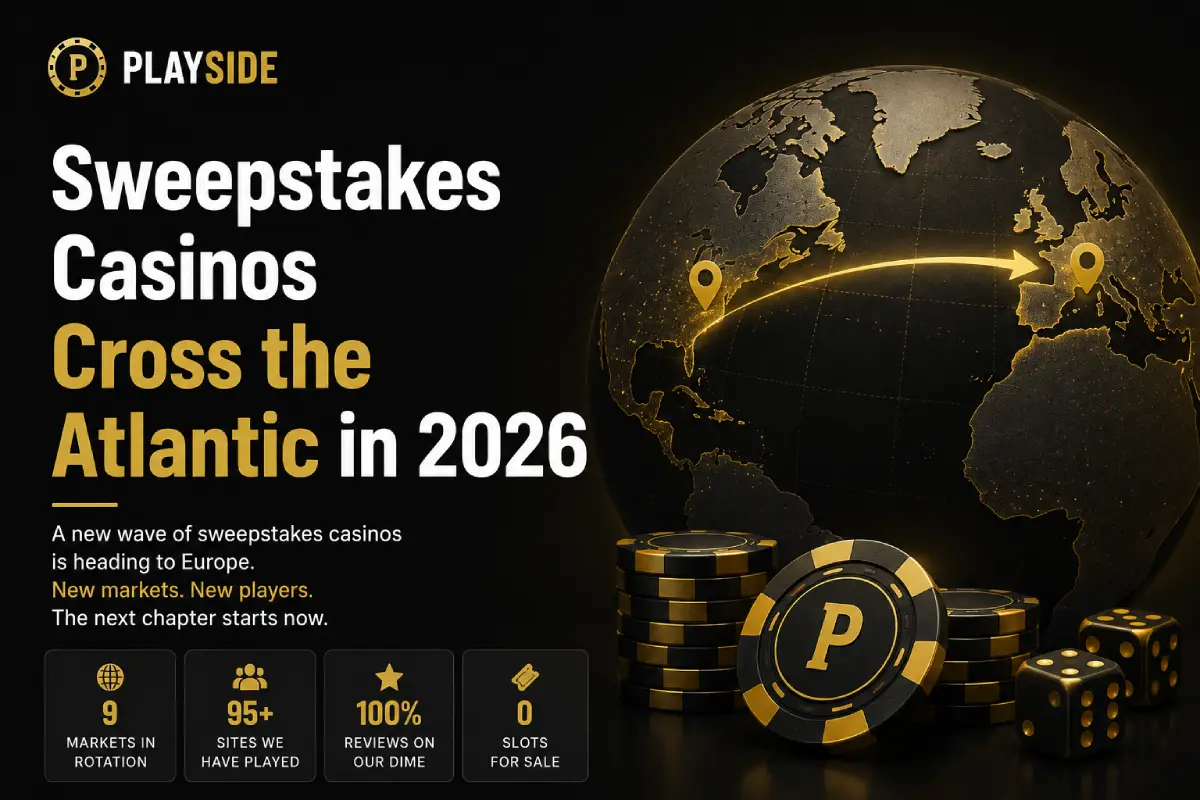
For most of the past five years, the sweepstakes model was a US grey-market oddity: two-currency casinos that leaned on a legal detour around gambling law to serve slot-style games in states with no other legal alternative. In 2026 that model is arriving in Europe, Australia and parts of Latin America, and the marketing bears no resemblance to the licensed casino most players are used to.
The story is not brand new, but the scale is. Two of the largest US sweeps operators launched EU-facing sites this year, three European brands have retooled to run on the sweeps format, and regulator conversations are only just getting under way. Here is what has changed, what to watch for, and where the model sits next to a traditional casino licence.
What a sweepstakes casino really is
The mechanic sounds convoluted the first time you encounter it, and it is. A sweepstakes casino runs two currencies in parallel. One is used for entertainment play with no cash value attached; the other is used to enter promotional sweepstakes that can then be redeemed for prizes. Players buy the entertainment currency and receive the promotional currency as a bonus alongside it. Legally, the site is selling one thing and giving another away, so at the moment of purchase it is not technically running a gambling product. Practically, players spin slot-style games with the promotional currency and cash out prizes at a fixed conversion rate.
Why the format is crossing borders in 2026
Two forces are driving the migration. Card processors, tightening their gambling-merchant policies, are increasingly happy to work with sweeps operators because the merchant category sits officially under entertainment rather than gambling. That alone opened up payment flows that stopped working for offshore-licensed sites earlier this year. The second force is regulatory arbitrage: European markets where launching a normal casino takes years and expensive licences can be entered as a sweepstakes without either. The result has been a wave of soft launches across the Netherlands, France, Ireland and Australia, all running on the same US-built game libraries.
Sweeps vs a properly licensed casino
Two different products with two different risk profiles for the player. Here is where they split on the things that really matter once you reach the cashier.
| Feature | Sweepstakes casino | Licensed casino |
|---|---|---|
| Regulator | None gambling-specific | UKGC, KSA, SGA, ANJ and the rest |
| Dispute route | Consumer law and credit-card chargeback | Regulator complaint channel plus ADR body |
| Bonus rules | Loosely defined, marketing-driven | Codified, with advertising rules in force |
| Withdrawal path | Prize redemption, frequently single-rail | Multi-rail, timed, with KYC behind it |
| Responsible-gambling tools | Optional and patchy | Mandatory and standardised |
The player view: what looks the same and what does not
Open a sweeps lobby and it feels almost identical to a normal casino: the same suppliers, the same slot titles, the same live-dealer feeds in some instances. The differences crop up around the edges. The sign-up flow makes you tick that you are entering a sweepstakes rather than gambling. The cashier splits your balance into two columns. Withdrawals are called prize redemptions and pass through a slower manual review. And the responsible-gambling toolkit is thinner, because the site is not obliged to deploy the standard set. For a casual player wanting to spin some slots in a market with no legal option, the experience can feel reasonably close to normal; for a regular used to a licensed cashier and proper dispute resolution, the gap widens quickly the moment something goes wrong.
Where regulators are drawing the line
The pushback kicked off in the US this spring, with several state attorneys general opening investigations into whether the sweeps structure was legal cover for unlicensed gambling. The Dutch KSA followed in June with an advisory stating that some sweeps formats fall under the gambling act despite the two-currency wrapper. The UK Gambling Commission has not moved yet, but its advertising-standards counterpart has already flagged sweeps ads aimed at UK players. The trend from every regulator that has spoken is the same: if the promotional currency clearly correlates with the amount spent on the entertainment currency, they will treat it as gambling.
Where Alkenind stands on sweeps
We only rank licensed casinos. Sweepstakes sites are covered in our news section for context, but they do not feature in market rankings, because our scoring model leans on regulator-backed protections that these products do not provide.
FAQ
Are sweepstakes casinos legal in Europe?
The short version: for now, in most markets, yes, because they run as sweepstakes promotions rather than licensed gambling products. That legal standing is under active review in several countries and could shift quickly.
Can I actually withdraw money from a sweepstakes casino?
Yes, through a prize redemption process that sits closer to a promotional payout than to a standard casino withdrawal. Expect stricter identity checks, longer processing windows and fewer withdrawal rails than at a licensed site.
Are the games rigged if there is no gambling licence?
The games themselves are generally supplied by the same studios as licensed casinos and run on certified RNGs. The missing gambling licence takes away independent oversight of the operator, not the mathematics of the games.
Should I use one instead of a licensed casino?
For most players in markets with solid regulated options, no. The dispute route, responsible-gambling tools and payout guarantees on a licensed site are the reason those licences exist. Sweeps start to make sense when legal alternatives are thin on the ground.